
DILLIMAX 1100 Penerangan
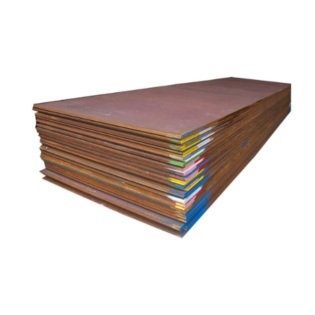
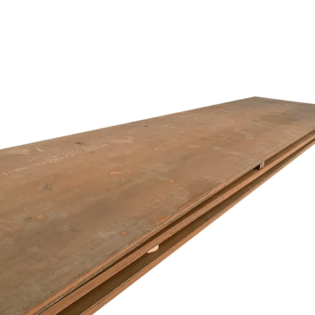
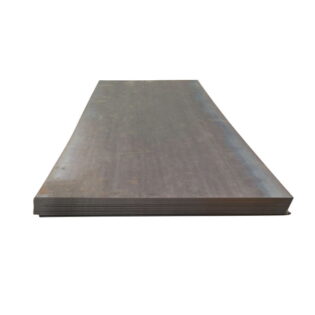
DILLIMAX 1100 ialah keluli struktur berbutir halus yang dipadamkan dan dibaja kekuatan tinggi dengan kekuatan hasil minimum 1100 MPa (160 ksi)1) dalam keadaan penghantaran bekas berfungsi. Sifat mekanikalnya dicapai dengan pelindapkejutan air diikuti dengan pembajaan.
DILLIMAX 1100 lebih disukai digunakan untuk komponen keluli jika berat akan dikurangkan ke tahap yang banyak, cth. alat angkat dan kren.
Penetapan dan julat aplikasi
DILLIMAX 1100 boleh dihantar dengan dimensi berikut mengikut program dimensi. Dimensi lain sebagai lebar yang lebih besar cth. untuk boom teleskopik mungkin boleh dilakukan atas permintaan.
DILLIMAX 1100 Penerangan
DILLIMAX 1100 ialah keluli struktur berbutir halus yang dipadamkan dan dibaja kekuatan tinggi dengan kekuatan hasil minimum 1100 MPa (160 ksi)1) dalam keadaan penghantaran bekas berfungsi. Sifat mekanikalnya dicapai dengan pelindapkejutan air diikuti dengan pembajaan.
DILLIMAX 1100 lebih disukai digunakan untuk komponen keluli jika berat akan dikurangkan ke tahap yang banyak, cth. alat angkat dan kren.
Penetapan dan julat aplikasi
DILLIMAX 1100 boleh dihantar dengan dimensi berikut mengikut program dimensi. Dimensi lain sebagai lebar yang lebih besar cth. untuk boom teleskopik mungkin boleh dilakukan atas permintaan.
| Ketebalan plat t [mm] (in)a) | Lebar [mm] (dalam)a) | |
| ≥ 8.0 (0.3) | ≤ 9.5 (0.37) | 2500 (100) |
| > 9.5 (0.37) | ≤ 40 (1.6) | 3050 (120) |
a) Nilai dalam kurungan adalah untuk maklumat sahaja.
DILLIMAX 1100 Komposisi kimia
Untuk analisis senduk, nilai had berikut dalam % boleh digunakan:
| C | Dan | Mn | P | S | Cr | Dalam | Mo | Daripada | V+Nb | B |
| ≤ 0.18 | ≤ 0.50 | ≤ 1.60 | ≤ 0.015 | ≤ 0.005 | ≤ 2.00 | ≤ 3.5 | ≤ 0.70 | ≤ 0.01 | ≤ 0.10 | ≤ 0.004 |
Keluli berbutir halus melalui kandungan aluminium yang mencukupi.
Setara karbon biasa CEV2) / CET3) ialah:
CEV = 0.78%
CET = 0.37%
DILLIMAX 1100 Keadaan penghantaran
Air dipadamkan dan dibakar.
Nilai dalam kurungan adalah untuk maklumat sahaja.
2) CEV = C +Mn/6 +(Cr+Mo+V)/5 + (Cu+Ni)/15
3) CET = C +(Mn+Mo)/10 +(Cr+Cu)/20 + Ni/40
Sifat mekanikal dan teknologi dalam keadaan penghantaran
Ujian tegangan pada suhu ambien – spesimen ujian melintang –
| Ketebalan plat Pemanjangan minimum t [mm] (dalam.) a) | Kekuatan tegangan Rm [MPa] (ksi) a) | Kekuatan hasil minimum ReH b) [MPa] (ksi) a) | minimum A5 [%] | pemanjangan A2in.c) [%] |
| ≥ 8 (0.3) < 20 (0.8) | 1200 – 1500 | 10 | 11 | |
| ≥ 20 (0.8) ≤ 40 (1.6) | (175 – 220 ksi)1) | 1100 (160) | 8 | 9 |
a) Nilai dalam kurungan adalah untuk maklumat sahaja.
b) Jika tidak jelas, kekuatan hasil Rp0.2 diukur sebaliknya.
c) Nilai ini digunakan jika diuji mengikut ASTM A370.
Ujian kesan pada spesimen Charpy-V
| DILLIMAX 1100 | Arah spesimen | Tenaga impak Av dalam J (ft.-lb.) a) pada ujian suhu -40 °C (-40 °F)a) |
| Keliatan tinggi | membujur / melintang | 30/27 (22/20) |
a) Nilai dalam kurungan adalah untuk maklumat sahaja.
Gred yang lebih sukar dengan nilai Charpy yang dijamin pada -60°C (-76 °F)4) boleh dipersetujui atas permintaan.
Nilai minimum yang ditentukan ialah purata 3 ujian. Satu nilai individu mungkin berada di bawah nilai purata minimum yang ditentukan, dengan syarat ia tidak kurang daripada 70% daripada nilai tersebut. Untuk ketebalan plat di bawah 12 mm (0.5 in) 4), ujian boleh dijalankan pada spesimen ujian Charpy-V dengan lebar yang dikurangkan; lebar minimum mestilah 5 mm (0.2 in) 4). Nilai impak minimum akan dikurangkan secara berkadar.
Ujian DILLIMAX 1100
Ujian tegangan dan hentaman akan dilakukan pada kedua-dua hujung unit rawatan haba.
Spesimen untuk ujian tegangan disediakan mengikut EN 10025-6. Pengujian dijalankan ke atas spesimen tolok panjang L0 = 5.65⋅√S0 atau L0 = 5⋅d0, mengikut EN ISO 6892-1. Ujian tegangan mengikut ASTM A370 mungkin dipersetujui.
Ujian impak akan dijalankan pada spesimen Charpy-V mengikut EN ISO 148-1. Melainkan dipersetujui sebaliknya, ujian akan dilakukan ke atas spesimen ujian melintang yang diambil seperti berikut:
- untuk ketebalan plat < 40 mm (1.6 in) 4): spesimen ujian hendaklah diambil dengan cara yang satu sisi tidak lebih jauh daripada 2 mm (0.08 in)4) daripada permukaan bergulung.
- untuk ketebalan plat ≥ 40 mm (1.6 in) 4): ¼ daripada ketebalan plat.
Melainkan dipersetujui sebaliknya, keputusan ujian didokumenkan dalam sijil 3.1 mengikut EN 10204.
Pemarkahan DILLIMAX 1100
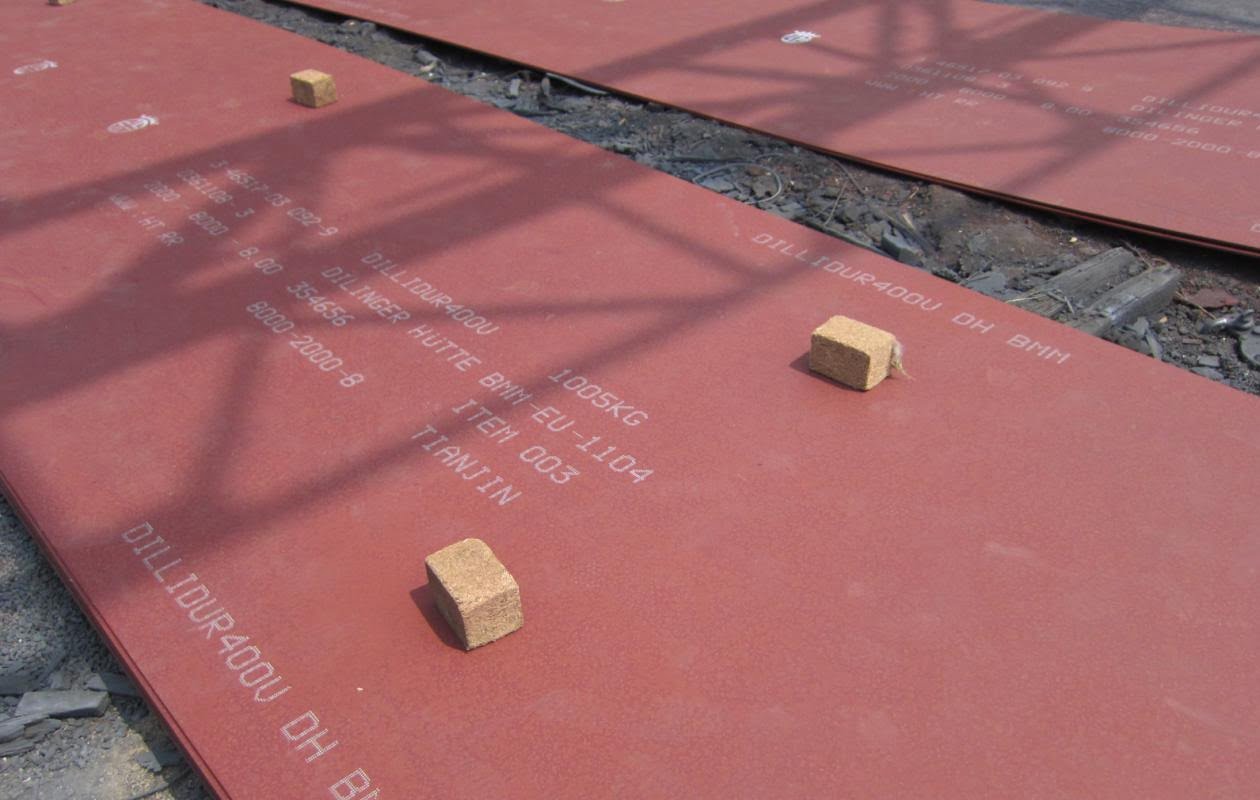
Melainkan dipersetujui sebaliknya, penandaan dilakukan melalui setem keluli tegasan rendah dengan sekurang-kurangnya maklumat berikut:
- gred keluli (DILLIMAX 1100)
- nombor haba
- nombor plat ibu dan plat individu
- simbol pengeluar
- tanda wakil pemeriksa yang diberi kuasa
4) Nilai dalam kurungan adalah untuk maklumat sahaja.
DILLIMAX 1100 Pemprosesan
Keseluruhan teknik pemprosesan dan penggunaan adalah penting untuk kebolehpercayaan produk yang diperbuat daripada keluli ini. Pengguna harus memastikan reka bentuk, pembinaan dan kaedah pemprosesannya sejajar dengan bahan, sesuai dengan teknologi terkini yang perlu dipatuhi oleh fabrikasi dan sesuai untuk kegunaan yang dimaksudkan. Pelanggan bertanggungjawab untuk pemilihan bahan. Pengesyoran EN 1011 (Kimpalan) dan CEN/TR 10347 (Pembentukan) serta pengesyoran berkenaan keselamatan kerja mengikut peraturan negara harus dipatuhi.
Kami mengesyorkan untuk berunding dengan kami sebelum kerja pertama dengan DILLIMAX 1100. Arahan terperinci untuk pemotongan api, kimpalan, pemesinan dan tentang sifat struktur DILLIMAX disediakan dalam maklumat teknikal "JANA PENJIMATAN DENGAN KELULI KEKUATAN TINGGI - DILLIMAX".
DILLIMAX 1100 Pembentukan sejuk
DILLIMAX 1100 boleh dibentuk sejuk di bawah 200 °C (390 °F)5) mengambil kira kekuatan hasil yang tinggi. Potongan api atau tepi yang digunting di kawasan lentur hendaklah dikisar sebelum terbentuk sejuk. Ia juga dinasihatkan untuk membulatkan tepi plat sedikit di bahagian luar selekoh yang mengalami tekanan tegangan semasa lenturan.
Pembentukan sejuk sentiasa berkaitan dengan pengerasan keluli dan penurunan keliatan. Berbeza dengan keluli kekuatan hasil yang lebih rendah DILLIMAX 1100 tidak boleh dirawat haba pada suhu kira-kira 550°C(1022°F)5) untuk mengurangkan kesan pengerasan terikan.
Selepas jumlah pembentukan sejuk yang lebih tinggi atau jika ditetapkan oleh peraturan, rawatan pelindapkejutan dan pembajaan baru mungkin diperlukan untuk memulihkan sifat mekanikal yang diperlukan. Dalam kes ini, kami mengesyorkan untuk berunding dengan kami sebelum membuat pesanan.
Semasa pemprosesan, langkah-langkah keselamatan yang perlu perlu diambil, supaya tiada siapa yang akan terdedah kepada bahaya oleh kemungkinan keretakan bahan kerja semasa proses pembentukan.
Geometri berikut biasanya boleh dicapai dengan pembentukan sejuk tanpa pembentukan kecacatan permukaan (di mana t ialah ketebalan plat):
| Jejari lenturan minimum | Lebar die minimum | |||
| Ketebalan plat t[mm] | < 20 mm (0.8 in) a) | ≥ 20 mm (0.8 in) a) | < 20 mm (0.8 in) a) | ≥ 20 mm (0.8 in) a) |
| Arah melintang | 4 t | 5 t | 12 t | 14 t |
| Arah membujur | 5 t | 6 t | 14 t | 16 t |
a) Nilai dalam kurungan adalah untuk maklumat sahaja.
Pembentukan panas
Jika suhu 220 °C (428 °F)5) melebihi, pembajaan awal akan diubah supaya sifat mekanikal terjejas. Untuk mendapatkan semula sifat awal, pelindapkejutan dan pembajaan baru menjadi perlu. Walau bagaimanapun, pelindapkejutan air bagi bahan kerja atau komponen yang terbentuk selalunya kurang berkesan daripada pelindapkejutan asal dalam kilang plat supaya fabrikasi mungkin tidak dapat membina semula sifat yang diperlukan. Oleh itu pembentukan panas tidak sesuai.
Akhir sekali, adalah menjadi tanggungjawab fabrikasi untuk mendapatkan nilai keluli yang diperlukan melalui rawatan haba yang sesuai.
Pemotongan api dan kimpalan
Disebabkan kekuatan hasil yang tinggi, DILLIMAX 1100 memerlukan penjagaan khas semasa pemprosesan plat.
Untuk pemotongan api, suhu prapemanasan minimum berikut disyorkan: 75 °C (165 °F)5) untuk ketebalan plat sehingga 20 mm (0.8 in)5) dan 125 °C (260 °F) 5) untuk ketebalan plat sehingga 40 mm
(1.6 in)5).
Untuk arahan kimpalan am, sila rujuk EN 1011-2. Setakat ini tiada bahan habis kimpalan tersedia yang menghasilkan sifat tegangan yang sepadan dengan bahan asas. Oleh itu, sambungan yang dimuatkan sepenuhnya mesti dielakkan oleh reka bentuk yang sesuai. Prapemanasan minimum, interpass dan suhu kerja hendaklah dihadkan kepada julat dari 150 °C (302 °F)5) sehingga 200 °C (390 °F)5).
Untuk mengelakkan keretakan sejuk akibat hidrogen, hanya bahan pengisi yang menambahkan sedikit hidrogen pada logam asas boleh digunakan. Oleh itu, kimpalan arka terlindung harus diutamakan.
Untuk kimpalan arka manual, elektrod dengan salutan asas (jenis HD < 5 ml / 100 g mengikut ISO 3690), dan dikeringkan mengikut arahan pengilang, harus digunakan.
5) Nilai dalam kurungan adalah untuk maklumat sahaja.
Dengan peningkatan ketebalan plat, peningkatan cas hidrogen dan sekatan kimpalan, rendaman untuk efusi hidrogen sejurus selepas kimpalan disyorkan. Suhu untuk rawatan ini hendaklah dalam julat 180 °C (355 °F)6) sehingga 220 °C (428 °F)6). Untuk mengurangkan hidrogen kepada kadar tidak kritikal, kami mengesyorkan masa penahanan berikut dalam julat suhu 180 °C (355 °F)6) sehingga 220 °C (428 °F)6) (1 jam untuk ketebalan sambungan kimpalan sehingga 20 mm (0.8 in)6); 2 jam untuk ketebalan sambungan kimpalan sehingga 30 mm (1.18 in)6); dan 4 jam untuk ketebalan sambungan kimpalan sehingga 40mm (1.6 in)6)).
Rawatan haba pelepasan tekanan tidak boleh dilakukan dan pelurus nyalaan biasanya tidak dibenarkan kerana operasi ini akan mengurangkan sifat tegangan keluli. Hanya di kawasan komponen di mana pelembutan tempatan boleh diterima, pelurus dengan nyalaan atau pemanasan induktif boleh digunakan (bersetuju dengan jabatan reka bentuk).
Keperluan penghantaran teknikal am
Melainkan dipersetujui sebaliknya, keperluan penghantaran teknikal am mengikut EN 10021 terpakai.
Toleransi
Melainkan dipersetujui sebaliknya, toleransi akan mengikut EN 10029, dengan kelas B untuk ketebalan dan jadual 4, kumpulan keluli H, untuk sisihan kerataan maksimum. Sisihan kerataan yang lebih kecil mungkin boleh dilakukan atas permintaan sebelum pesanan (lihat spesifikasi DILLIMX TL untuk ledakan teleskopik).
Kualiti permukaan
Melainkan dipersetujui sebaliknya, spesifikasi akan mengikut EN 10163-2, kelas B3.
Nota am
Jika keperluan tertentu dituntut dan tidak diliputi dalam helaian data ini, sila hubungi kami dengan spesifikasi untuk semakan dan persetujuan kami sebelum membuat pesanan. Maklumat dalam helaian data ini ialah penerangan produk. Helaian data ini dikemas kini mengikut keperluan semasa. Versi terkini boleh didapati dari kilang atau sebagai muat turun di www.dillinger.de.
6) Nilai dalam kurungan adalah untuk maklumat sahaja.