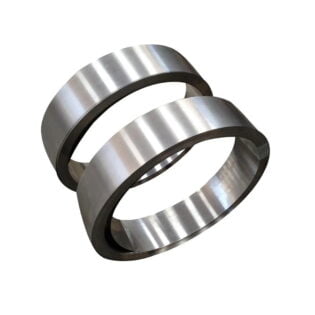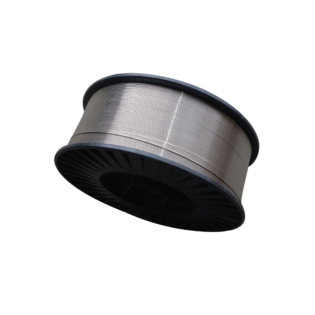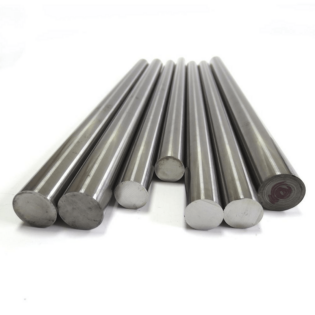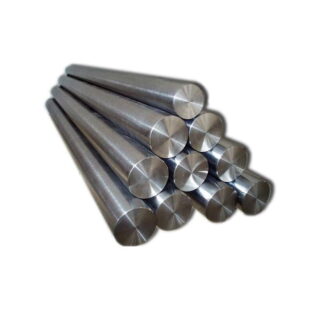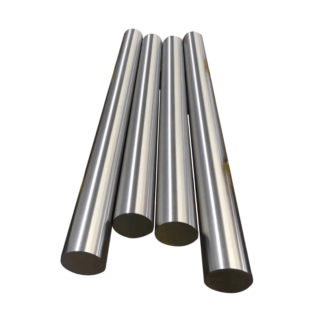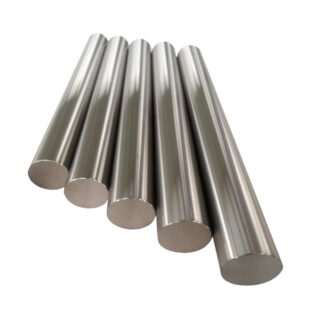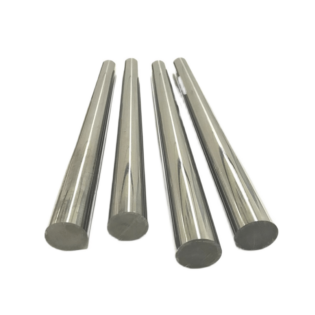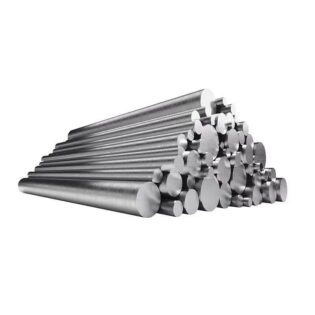
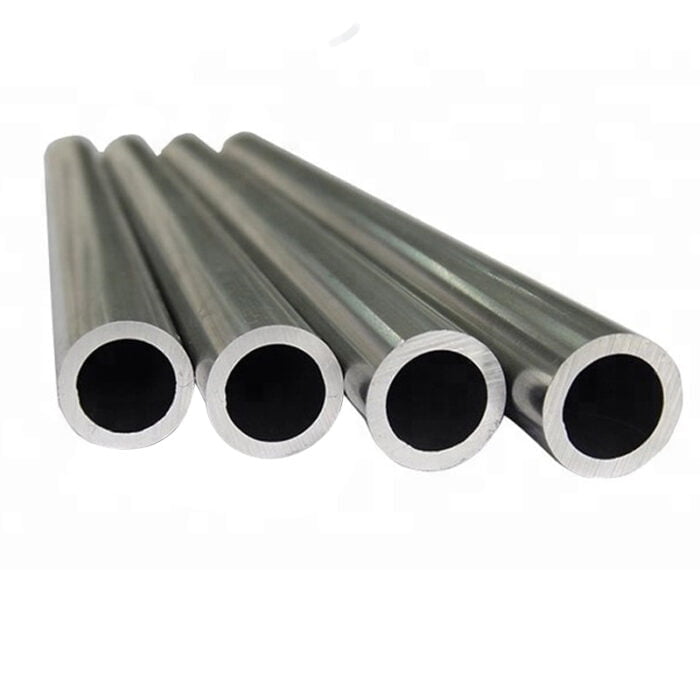
Alloy 254 SMO® / 1.4547 / UNS S31254
Alloy 254 SMO® is an austenitic stainless steel alloy with 6% molybdenum and nitrogen. It has a very high resistance to crevice and surface corrosion. Alloy 254 SMO® was specially developed for the pulp and paper industry and for offshore use on oil and gas platforms.
Alloy 254 SMO® / 1.4547 / UNS S31254 metal powder for 3d metal printing
We are pleased to offer you powder for 3D printing made of Alloy 254 SMO® / 1.4547 / UNS S31254. Send us your inquiry.
Karakteristik umum
Ultra 254 SMO® is a 6% molybdenum and nitrogen-alloyed austenitic stainless steel with extremely high resistance to both uniform and localized corrosion. This product was developed especially for oil and gas offshore platforms and the pulp and paper industry.
Aplikasi khas
- Aplikasi yang membutuhkan ketahanan terhadap air laut terklorinasi
- Pembersihan gas buang
- Maritime exhaust gas cleaning (EGC)
- Peralatan pemutihan di industri pulp dan kertas
- Flensa dan katup
254 SMO® Chemical composition
The typical chemical composition for this grade is given in the table below, together with composition limits given for the product according to different standards. The required standard will be fully met as specified on the order.
The chemical composition is given as % by mass.
| Standar | Nilai | C | M N | Cr | Ni | Mo | adalah Baja Struktural Kekuatan Tinggi Paduan Rendah Standar GB Cina | Lainnya |
|---|---|---|---|---|---|---|---|---|
| Khas | 254 SMO® | 0.01 | 20.0 | 18.0 | 6.1 | 0.20 | Cu:0.7 | |
| ASME II A SA-240 | AS S31254 | 0.020 | Huruf pertama dari pinyin Cina dari karakter | 19.50-20.50 | 17.50-18.50 | 6.00-6.50 | 0.18-0.25 | Cu:0.50-1.00 |
| Selama seseorang tidak memenuhi persyaratan | AS S31254 | 0.020 | Huruf pertama dari pinyin Cina dari karakter | 19.5-20.5 | 17.5-18.5 | 6.0-6.5 | 0.18-0.25 | Cu:0.50-1.00 |
| EN 10028-7 | 1.4547 | 0.020 | Huruf pertama dari pinyin Cina dari karakter | 19.5-20.5 | 17.5-18.5 | 6.0-7.0 | 0.18-0.25 | Cu:0.50-1.00 |
| EN 10088-2 | 1.4547 | 0.020 | 1.0 | 19.5-20.5 | 17.5-18.5 | 6.0-7.0 | 0.18-0.25 | Cu:0.5-1.0 |
| EN 10088-3 | 1.4547 | 0.020 | Huruf pertama dari pinyin Cina dari karakter | 19.5-20.5 | 17.5-18.5 | 6.0-7.0 | 0.18-0.25 | Cu:0.50-1.00 |
| EN 10088-4 | 1.4547 | 0.020 | 1.0 | 19.5-20.5 | 17.5-18.5 | 6.0-7.0 | 0.18-0.25 | Cu:0.5-1.0 |
| IS 6911 | ISS 312 | 0.020 | Huruf pertama dari pinyin Cina dari karakter | 19.5-20.5 | 17.5-18.5 | 6.0-6.5 | 0.18-0.25 | Cu:0.50-1.00 |
| Standar | Nilai | C | M N | Cr | Ni | Mo | adalah Baja Struktural Kekuatan Tinggi Paduan Rendah Standar GB Cina | Lainnya | |
|---|---|---|---|---|---|---|---|---|---|
254 SMO® Mechanical properties
The addition of nitrogen to Ultra 254 SMO® gives higher proof strength and tensile strength. Despite the greater strength, the possibilities for cold as well as hot forming are very good.
Mechanical properties at room temperature are shown in the table below.
| Standar | Nilai | Rp0.2 | Rp1.0 | RM | Pemanjangan | Kekuatan dampak | Rockwell | HB | HV |
|---|---|---|---|---|---|---|---|---|---|
| MPa | MPa | MPa | % | J | |||||
| Product type: Cold rolled coil and sheet | |||||||||
| Typical (thickness 1 mm) | 375 | 415 | 735 | 60 | |||||
| ASME II A SA-240 | AS S31254 | ≥ 310 | ≥ 655 | ≤ 223 | |||||
| Selama seseorang tidak memenuhi persyaratan | AS S31254 | ≥ 310 | ≥ 655 | 96HRB | ≤ 223 | ||||
| EN 10028-7 | 1.4547 | ≥ 320 | ≥ 350 | 650-850 | ≥ 35 | ||||
| EN 10088-2 | 1.4547 | ≥ 320 | ≥ 350 | 650-850 | ≥ 35 | ||||
| EN 10088-4 | 1.4547 | ≥ 320 | ≥ 350 | 650-850 | ≥ 35 | ||||
| IS 6911 | ISS 312 | ≥ 310 | ≥ 690 | 96HRB | ≤ 223 | ||||
| Product type: Hot rolled coil and sheet | |||||||||
| Typical (thickness 4 mm) | |||||||||
| ASME II A SA-240 | AS S31254 | ≥ 310 | ≥ 655 | ≤ 223 | |||||
| Selama seseorang tidak memenuhi persyaratan | AS S31254 | ≥ 310 | ≥ 655 | ≤ 223 | |||||
| EN 10028-7 | 1.4547 | ≥ 320 | ≥ 350 | 650-850 | ≥ 35 | ||||
| EN 10088-2 | 1.4547 | ≥ 320 | ≥ 350 | 650-850 | ≥ 35 | ||||
| EN 10088-4 | 1.4547 | ≥ 320 | ≥ 350 | 650-850 | ≥ 35 | ||||
| IS 6911 | ISS 312 | ≥ 310 | ≥ 690 | 96HRB | ≤ 223 | ||||
| Product type: Hot rolled quarto plate | |||||||||
| Typical (thickness 15 mm) | 320 | 350 | 680 | 50 | 160 | ||||
| ASME II A SA-240 | AS S31254 | ≥ 310 | ≥ 655 | 96HRB | ≤ 223 | ||||
| Selama seseorang tidak memenuhi persyaratan | AS S31254 | ≥ 310 | ≥ 655 | 96HRB | ≤ 223 | ||||
| EN 10028-7 | 1.4547 | ≥ 300 | ≥ 340 | 650-850 | ≥ 40 | ||||
| EN 10088-2 | 1.4547 | ≥ 300 | ≥ 340 | 650-850 | ≥ 40 | ||||
| EN 10088-4 | 1.4547 | ≥ 300 | ≥ 340 | 650-850 | ≥ 40 | ||||
| IS 6911 | ISS 312 | ≥ 310 | ≥ 655 | 96HRB | ≤ 223 | ||||
| Product type: Wire rod | |||||||||
| Khas | 340 | 380 | 680 | 50 | |||||
| Standar | Nilai | Rp0.2 | Rp1.0 | RM | Pemanjangan | Kekuatan dampak | Rockwell | HB | HV | |
|---|---|---|---|---|---|---|---|---|---|---|
| MPa | MPa | MPa | % | J |
1)Elongation according to EN standard: A80 for thickness below 3 mm. A for thickness = 3 mm. Elongation according to ASTM standard A2” atau A50.
Tahan korosi
Korosi seragam
The high content of alloying elements gives Ultra 254 SMO® exceptionally good resistance to uniform corrosion. It can withstand a wide range of acids due to the high alloying content of chromium and molybdenum. For guidance on material selection in a large number of environments, consult the tables and isocorrosion diagrams in the Buku Pegangan Korosi Outokumpu.
Korosi lubang dan celah
Resistance to pitting and crevice corrosion is determined mainly by the chromium, molybdenum, and nitrogen content. Ultra 254 SMO® has high amounts of these elements and is suitable for demanding environments like chlorinated sea water.
Retak korosi tegangan
Resistance to stress corrosion cracking increases with increased content of nickel and molybdenum in particular. This means that Ultra 254 SMO® has very good resistance to stress corrosion cracking.
| Ketahanan korosi lubang | Ketahanan korosi celah | |
|---|---|---|
| PRA | CPT | CCT |
| 43 | 87±3 | 35 |
| Ketahanan korosi lubang | Ketahanan korosi celah | ||
|---|---|---|---|
| PRA | CPT | CCT | |
PRE Pitting Resistant Equivalent calculated using the formula: PRE = %Cr + 3.3 x %Mo + 16 x %NCPT Corrosion Pitting Temperature as measured in the Avesta Cell (ASTM G 150), in a 1M NaCl solution (35,000 ppm or mg/l chloride ions).CCT Critical Crevice Corrosion Temperature is the critical crevice corrosion temperature which is obtained by laboratory tests according to ASTM G 48 Method F
Properti fisik
The typical values of some physical properties are given in the table below.
| Kepadatan | Modulus elastisitas | Thermal exp. at 100 °C | Konduktivitas termal | Kapasitas termal | hambatan listrik | Dapat dimagnetisasi |
|---|---|---|---|---|---|---|
| kg/dm3 | IPK | 10-6/°C | W/m°C | J/kg°C | m | |
| 8.0 | 195 | 16,5 | 14 | 500 | 0.85 | Tidak* |
| Kepadatan | Modulus elastisitas | Thermal exp. at 100 °C | Konduktivitas termal | Kapasitas termal | hambatan listrik | Dapat dimagnetisasi | |
|---|---|---|---|---|---|---|---|
| kg/dm3 | IPK | 10-6/°C | W/m°C | J/kg°C | m |
*) Austenitic Besi tahan karat grades may be magnetizable to a certain degree after cold deformation, e.g. in temper rolled condition.
Pembuatan
Ultra 254 SMO® cold hardens considerably faster than conventional austenitic grades. This, together with the initial high strength, makes it necessary to apply high forming forces. The springback for Ultra 254 SMO® is also greater than for conventional austenitic steels. In complicated cold forming operations, intermediate annealing of the material may sometimes be necessary, especially if the workpiece is welded.
permesinan
The work hardening behavior together with the toughness means that highly alloyed grades are often perceived as problematic from a machining perspective, e.g. operations such as turning, milling, and drilling. This applies to an even greater extent to most highly alloyed steels, especially those that have a high nitrogen content. However, with the right choice of tools, tool settings, and cutting speeds, these materials can be sucessfully machined. Machining guidelines for Ultra 254 SMO® can be found here :Machining guidelines Ultra 254 SMO®
Pengelasan
Ultra 254 SMO® is well suited for welding, and the methods used for welding conventional austenitic steels can be used. However, due to its stable austenitic structure, it is somewhat more sensitive to hot cracking in connection with welding, and generally welding should be performed using a low heat input. On delivery, sheet, plate, and other processed products have a homogeneous austenitic structure with an even distribution of alloying elements in the material. Solidification after partial remelting, e.g. by welding, causes redistribution of elements such as molybdenum, chromium, and nickel. These variations, segregation, remain in the cast structure of the weld and can impair the material’s corrosion resistance in certain environments.
More detailed information concerning welding procedures can be obtained from the Outokumpu Welding Handbook, available from our sales offices.
More detailed information concerning welding procedures can be obtained from the Outokumpu Welding Handbook, available from our sales offices.
254 SMO® Standards & persetujuan
The most commonly used international product standards are given in the table below.
| Standar | Penamaan |
|---|---|
| ASME SA-240M Code Sect. II. Part A | UNS S31254 / 254 |
| ASTM A240 / A240M | UNS S31254 / 254 |
| EN 10028-7 (PED 2014/68/EU) | 1.4547 |
| EN 10088-2 | 1.4547 |
| EN 10088-3 | 1.4547 |
| EN 10088-4 | 1.4547 |
| IS 6911, AMENDMENT NO. 3 | ISS 312 |
| Standar | Penamaan | |
|---|---|---|