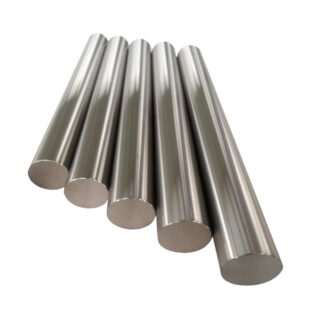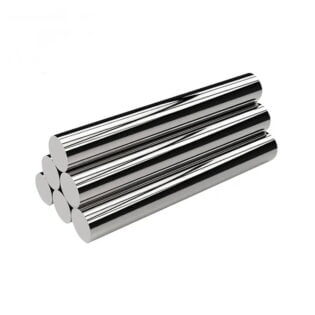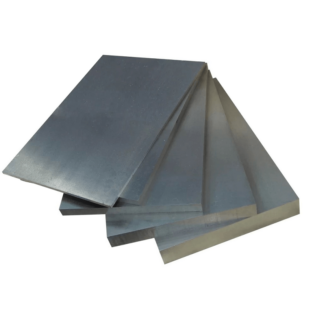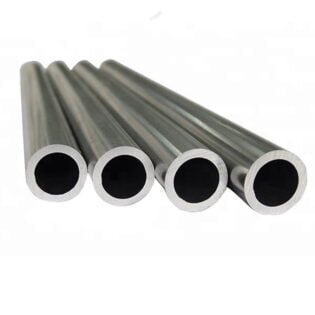
Sifat Mekanik Paduan Nimonic 263
Sifat mekanik Nimonic Alloy 263™ disediakan di bawah ini.
| Properti | Metrik | Imperial |
|---|---|---|
| Kekuatan tarik (pengerasan presipitasi, nilai pada suhu kamar) | 940 MPa | 136000 psi |
| Kekuatan hasil (@regangan 0,200%, pengerasan presipitasi, nilai pada suhu kamar) | 550MPa | 79800 psi |
| Perpanjangan putus (presipitasi mengeras) | 39% | 39% |
Sifat Termal Paduan Nimonic 263
Sifat termal Nimonic Alloy 263™ diberikan di bawah ini.
| Properti | Metrik | Imperial |
|---|---|---|
| Koefisien ekspansi termal (@21-100°C/69,8-212°F) | 10,3 m/m°C | 5,72 inci/inci°F |
| Konduktivitas termal | 11,7 W/mK | 81,2 BTU dalam/jam.ft².°F |
- AMS 5872
- AMS 5886
- DARI 2.4650
Nimonic 263 Superalloy Berbasis Nikel
NIMONIK® paduan 263 (UNS N07263/W. Nr. 2.4650), suatu paduan berbasis nikel lelehan udara, dikembangkan oleh Rolls-Royce (1971) Ltd. untuk menghasilkan bahan lembaran yang dapat dengan mudah dibuat dan akan menawarkan peningkatan keuletan pada rakitan yang dilas untuk menggantikan paduan NIMONIC 80A. Ini dirancang sebagai bahan lembaran untuk memenuhi kriteria desain khusus dalam hal ketahanan terhadap tegangan dan kekuatan mulur.
Nimonic 263® adalah paduan nikel-kobalt kromium-molibdenum yang tahan lama dan dirancang khusus untuk menggabungkan sifat kekuatan lama yang baik dengan karakteristik fabrikasi yang sangat baik dalam kondisi anil. Meskipun kekuatannya pada suhu tinggi tidak setinggi Waspaloy® atau Rene 41, paduan ini jauh lebih mudah untuk dibentuk atau dilas dibandingkan paduan ini.
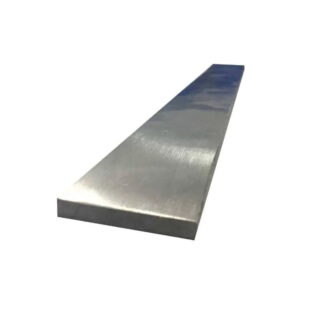
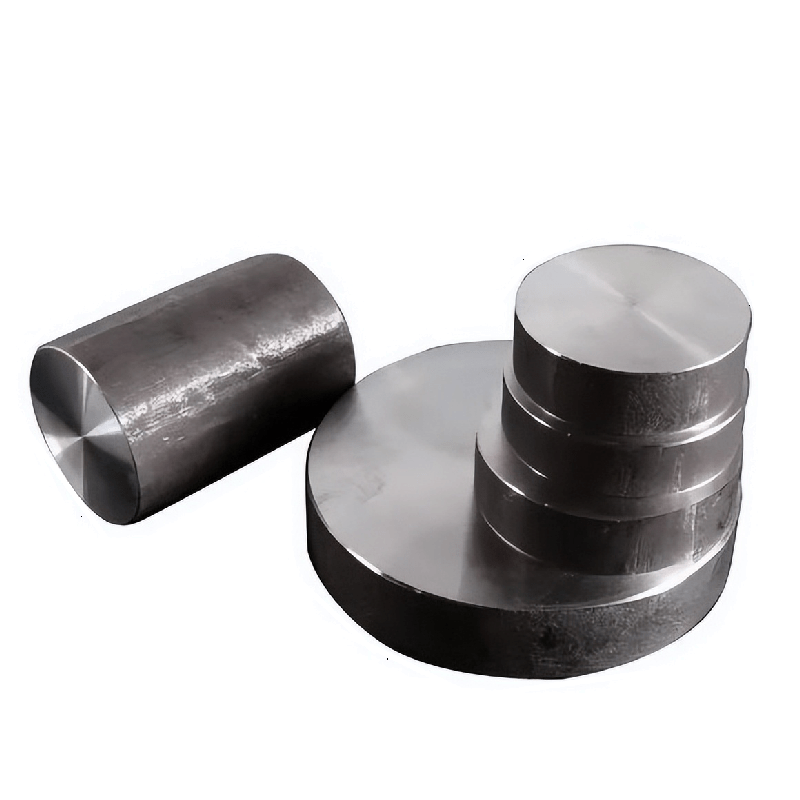
Pelat paduan C263 – Pelat Nimonic 263® menunjukkan keuletan tarik suhu menengah yang sangat baik, dan biasanya tidak mengalami masalah retak umur regangan yang umum terjadi pada paduan yang diperkuat gamma prime lainnya. Kelas ini biasanya digunakan untuk aplikasi hingga sekitar 1650°F (900°C). Kelas ini menggabungkan sifat-sifat yang membuatnya cocok untuk berbagai komponen fabrikasi baik pada mesin turbin pesawat terbang maupun aplikasi turbin darat.
Sekarang tersedia dalam semua bentuk standar. Teknik pengelasan untuk paduan ini serupa dengan yang umum digunakan untuk paduan berbasis nikel yang dapat diperkeras usia lainnya.
Selama operasi pengelasan penyelamatan, perlakuan panas pra-pengelasan tidak diperlukan pada rakitan yang sudah mengeras karena usia, namun perlakuan pengerasan usia selanjutnya diinginkan setelah semua pengelasan penyelamatan selesai. Material akan menua saat digunakan jika suhu di atas 750°C.
Komposisi Kimia Nimonic 263:
| Elemen | Membatasi Komposisi Kimia (%) |
|---|---|
| Karbon | 00,04%-0,08% |
| silikon | 00,40% maks |
| mangan | 00,60% maks |
| Sulfur | 00,007% maks |
| Perak | 00,0005% maks |
| Aluminium | 00,60% maks |
| Boron | 00,005% maks |
| Bismut | 00,0001% maks |
| Kobalt | 19,0%-21,0% |
| kromium | 19,0%-21,0% |
| Tembaga | 00,20% maks |
| Besi | 00,7% maks |
| Molibdenum | 5,6%-6,1% |
| Memimpin | 00,0020% maks |
| Titanium | 1,9%-2,4% |
| Aluminium dan titanium | 2,4%-2,8% |
| Nikel | Keseimbangan* |
Pembuatan dan Petunjuk Kerja Nimonic 263:
Nimonic 263 dapat dikerjakan dengan panas pada kisaran suhu 1742-2102°F (950-1150°C). Sebaliknya, sifat mekanik pembentuk dingin diberikan dalam tabel berikut:
| 00,1% bukti stres | 343 MPa |
|---|---|
| 00,2% bukti stres | 355 MPa |
| 00,5% bukti stres | 369 MPa |
| Daya tarik | 788 MPa |
| Perpanjangan pada 50 mm, % | 59.7 |
| Kekerasan | 195HV |
| Berarti ukuran butir | ASTM 6.5 |
| nilai Erichsen | 12,8mm |
| Kekuatan geser | 588MPa |
| Rasio geser terhadap kekuatan tarik | 00,75 |
Perlu diketahui bahwa data diperoleh dengan menggunakan lembaran anil setebal 0,5-1,2 mm, menggunakan teknik anil 3 menit pada suhu 1190°C dengan metode fluidized bed quenching.
Annealing Nimonic 263 diperlukan selama manipulasi dengan paduan. Petunjuk berikut harus diikuti mengenai bentuk atau bentuk:
- Batangan atau bagian yang berat biasanya dilunakkan dengan perlakuan panas yang berlangsung selama dua jam pada suhu 2102°F (1150°C);
- Annealing lembaran harus berlangsung selama 15 menit pada kisaran suhu 1922-2012°F (1050-1100°C), diikuti dengan pendinginan cepat. Untuk lembaran, pendinginan unggun terfluidisasi juga dapat digunakan.
Tergantung pada konfigurasi sambungan dan ketebalan material, paduan Nimonic 263 dapat dengan mudah dilas dengan proses T.I.G dan M.I.G otomatis dan manual berpelindung argon. Untuk semua proses pengelasan berpelindung argon, logam pengisinya adalah spesifikasi AMS 5966 (logam pengisi Nimonic 263). Dalam beberapa poin berikutnya, Anda dapat melihat semua proses pengelasan berpelindung argon yang berbeda:
- TIG Otomatis pengelasan dapat digunakan pada bagian dengan ketebalan hingga 3,25 mm, dan hanya untuk sambungan pantat sederhana tanpa bentuk khusus apa pun. Logam pengisi Nimonic 263 harus digunakan untuk bagian yang lebih tebal dari 1,6 mm, sedangkan pengelasan dapat diperoleh tanpa logam pengisi untuk bagian yang lebih tipis dari 1,6 mm;
- Panduan T.I.G. pengelasan harus dilakukan pada sambungan yang lebih rumit dengan bentuk khusus dan direkomendasikan untuk digunakan pada ketebalan hingga 4,8 mm;
- AKU G. pengelasan dapat digunakan pada semua ketebalan bagian, tetapi paling baik digunakan pada ketebalan di atas 4,8 mm. Selain itu, ini harus digunakan dibandingkan T.I.G. jika banyak pengelasan diperlukan. Kondisi transfer semprot dan celup dapat digunakan dalam proses ini.
Proses pengelasan dan penyambungan lainnya yang dapat digunakan pada paduan Nimonic 263, tetapi pada tingkat yang lebih rendah:
- Pengelasan titik, jahitan dan jahitan;
- Pengelasan flash-butt digunakan untuk pembuatan cincin turbin gas.
Sifat Fisik Nimonic 263:
| Kepadatan | 00,302 pon/inci3 |
|---|---|
| 8,36 gram/cm3 | |
| Rentang lebur | Suhu cairan 2471°F (1355°C) |
| Suhu solidus 2372°F (1300°C) | |
| Kalor Spesifik pada J/kg | 862°F (461°C) |
Sifat Mekanik Nimonic 263:
| Kekuatan tarik (presipitasi mengeras pada suhu kamar) | 940 MPa |
|---|---|
| 136.000 psi | |
| Kekuatan hasil (@regangan 0,200%, pengerasan presipitasi, nilai pada suhu kamar) | 550MPa |
| 79.800 psi | |
| Perpanjangan putus (presipitasi mengeras) | 39% |
Properti Termal Nimonic 263:
| Koefisien ekspansi termal pada 69,8-212°F (21-100°C) | 5,72 inci/inci°F |
|---|---|
| 10,3 m/m°C | |
| Konduktivitas termal | 81,2 BTU dalam/jam.ft².°F |
| 11,7 W/mK |
Perlakuan Panas Nimonic 263:
Biasanya, paduan Nimonic 263 harus diberi perlakuan panas dua tahap yang dilakukan di udara, atau lebih khusus lagi perlakuan larutan dan pengerasan umur. Berikut ini semua rincian tentang perlakuan panas yang direkomendasikan untuk berbagai bentuk paduan:
- Batangan yang diekstrusi atau ditempa dan bagian untuk penempaan dan/atau pemesinan – 1,5-2,5 jam pada 2102°F (1150°C)/WQ untuk pengolahan larutan dan 8 jam pada 1472°F (800°C)/AC untuk perawatan penuaan;
- Lembaran canai panas – 1,5 jam pada 2102°F (1150°C)/WQ untuk perlakuan larutan dan 8 jam pada 1472°F (800°C)/AC untuk perlakuan penuaan;
- Lembaran canai dingin dan bagian yang ditarik dingin (termasuk tabung) – 3-10 menit pada 2102°F (1150°C)/FBQ atau WQ untuk perlakuan larutan dan 8 jam pada 1472°F (800°C)/AC untuk perlakuan penuaan.