C36000 Description
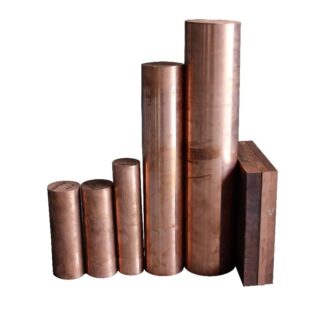
C36000 Free Cutting Brass is a high-performance copper-zinc alloy engineered specifically for superior machinability. Containing 2.5-3.0% lead for enhanced cutting characteristics, this alloy delivers exceptional chip control, extended tool life, and superior surface finishes. With a machinability rating of 100% (industry standard), C36000 enables high-speed production of precision components while maintaining excellent mechanical properties and good corrosion resistance.
Quick Specifications
C36000 Free Cutting Brass – Technical Product Introduction
Product Overview
C36000 Free Cutting Brass, also known as Alloy 360 or Free Machining Brass, is a copper-zinc alloy specifically engineered for exceptional machinability. This alloy incorporates controlled amounts of lead to significantly enhance cutting characteristics, making it the industry standard for high-speed machining operations and precision component manufacturing.
Key Technical Features
| Fitur | Spesifikasi | Technical Advantage |
|---|---|---|
| Peringkat Kemampuan Mesin | 100% (industry standard) | Fastest cutting speeds, best chip control |
| Lead Content | 2.5-3.0% | Optimal chip breaking and tool lubrication |
| Surface Finish Capability | Ra 0.4-0.8 μm | Minimal secondary finishing required |
| Konduktivitas termal | 115 W/m·K | Excellent heat dissipation during machining |
| Konduktivitas listrik | 26% IACS | Suitable for electrical applications |
| Tahan korosi | Good in atmospheric conditions | Long-term durability in most environments |
Komposisi kimia
Standard Chemical Composition (ASTM B16)
| Elemen | Content (%) | Fungsi | Typical Analysis |
|---|---|---|---|
| Copper (Cu) | 60.0-63.0 | Base metal for strength and conductivity | 61.5 |
| Zinc (Zn) | Sisa | Strength enhancement and cost optimization | 35.5 |
| Lead (Pb) | 2.5-3.0 | Machinability enhancement and chip control | 2.8 |
| Iron (Fe) | ≤0.35 | Controlled impurity | 0.15 |
| Nickel (Ni) | 0,5 | Minor alloying element | 0.25 |
| Aluminum (Al) | 0,05 | Deoxidizer | 0.02 |
| Other Elements | ≤0.5 total | Controlled impurities | - |
Compositional Comparison with Related Alloys
| paduan | Cu (%) | Zn (%) | Pb (%) | Primary Characteristic |
|---|---|---|---|---|
| C36000 | 60.0-63.0 | Rem | 2.5-3.0 | Excellent machinability |
| C26000 | 68.5-71.5 | Rem | - | High ductility |
| C38500 | 56.0-59.0 | Rem | 2.5-3.5 | Architectural applications |
| C46400 | 59.0-62.0 | Rem | - | Naval brass |
| C35300 | 60.0-63.0 | Rem | 1.5-2.5 | Medium lead content |
Peralatan mekanis
Mechanical Properties by Temper Condition
| Temper Designation | Tensile Strength (MPa) | Yield Strength (MPa) | Elongation (%) | Hardness (Rb) | Reduction of Area (%) |
|---|---|---|---|---|---|
| O61 (Annealed) | 338-380 | 124-140 | 45-53 | 50-60 | 55-65 |
| H01 (1/4 Hard) | 370-415 | 140-310 | 25-35 | 62-75 | 45-55 |
| H02 (1/2 Hard) | 415-450 | 165-345 | 20-30 | 75-85 | 35-45 |
| H04 (Full Hard) | 450-485 | 180-380 | 15-25 | 80-90 | 25-35 |
Fatigue and Impact Properties
| Property | Nilai | Test Condition | Standar |
|---|---|---|---|
| Fatigue Strength | 140-160 MPa | 10⁸ cycles, rotating beam | ASTM D7791 |
| Impact Strength | 35-45 J | Charpy V-notch, room temperature | ASTM E23 |
| Fracture Toughness | 45-55 MPa√m | Plane strain conditions | ASTM E399 |
| Endurance Limit | 130-150 MPa | Fully reversed loading | ASTM D7791 |
Properti fisik
Thermal and Electrical Properties
| Property | Nilai | Satuan | Temperature (°C) | Test Method |
|---|---|---|---|---|
| Kepadatan | 8.49 | g/cm | 20 | ASTM B311 |
| Melting Point (Solidus) | 885 | °C | - | DSC Analysis |
| Melting Point (Liquidus) | 900 | °C | - | DSC Analysis |
| Konduktivitas termal | 115 | W/m·K | 20 | ASTM E1461 |
| Konduktivitas termal | 125 | W/m·K | 100 | ASTM E1461 |
| Konduktivitas listrik | 26 | % IACS | 20 | ASTM B193 |
| Resistivitas Listrik | 0.066 | μΩ·m | 20 | ASTM B193 |
Thermal Expansion and Modulus Properties
| Property | Nilai | Satuan | Temperature Range | Standar |
|---|---|---|---|---|
| Coefficient of Linear Expansion | 20.5 | μm/m·°C | 20-100°C | ASTM E831 |
| Coefficient of Linear Expansion | 21.0 | μm/m·°C | 20-200°C | ASTM E831 |
| Modulus Elastisitas | 97 | IPK | 20°C | ASTM E111 |
| Shear Modulus | 37 | IPK | 20°C | ASTM E143 |
| Poisson’s Ratio | 0.34 | - | 20°C | ASTM E132 |
| Specific Heat Capacity | 377 | J/kg·K | 20°C | ASTM E1269 |
Machinability Characteristics
Optimal Machining Parameters
| Operation | Speed (m/min) | Feed Rate (mm/rev) | Depth of Cut (mm) | Tool Geometry | Surface Finish (Ra μm) |
|---|---|---|---|---|---|
| Turning – Roughing | 150-300 | 0.25-0.50 | 2.0-5.0 | CNMG, DNMG | 1.6-3.2 |
| Turning – Finishing | 200-400 | 0.05-0.20 | 0.5-2.0 | CNMG, VCMT | 0.4-0.8 |
| Face Milling | 100-200 | 0.10-0.30 | 1.0-3.0 | Face mill insert | 0.8-1.6 |
| End Milling | 80-150 | 0.08-0.20 | 1.0-2.0 | Carbide end mill | 0.8-1.6 |
| Drilling (HSS) | 30-60 | 0.10-0.30 | - | 118° point angle | 1.6-3.2 |
| Drilling (Carbide) | 60-120 | 0.15-0.35 | - | 130° point angle | 1.6-3.2 |
| Reaming | 15-30 | 0.20-0.50 | 0.1-0.3 | Straight flute | 0.4-0.8 |
| Threading | 20-40 | Pitch dependent | - | 60° threading tool | 1.6-3.2 |
Tool Life and Machining Performance
| Cutting Tool Material | Relative Tool Life | Recommended Application | Cutting Speed Range |
|---|---|---|---|
| High-Speed Steel (HSS) | 100% (baseline) | General machining, drilling, tapping | 30-100 m/min |
| Uncoated Carbide | 200-300% | High-speed turning, milling | 100-300 m/min |
| TiN Coated Carbide | 300-400% | Extended tool life applications | 150-400 m/min |
| TiAlN Coated Carbide | 350-450% | High-speed finishing | 200-500 m/min |
| CBN (Cubic Boron Nitride) | 500-800% | Ultra-high-speed machining | 300-800 m/min |
Chip Formation and Control
| Machining Operation | Chip Type | Chip Control Rating | Recommended Break | Tool Wear Pattern |
|---|---|---|---|---|
| Memutar | Short, broken chips | Bagus sekali | Chip breaker geometry | Uniform flank wear |
| Penggilingan | Small segments | Very good | Positive rake angle | Corner wear |
| Pengeboran | Ribbon chips | Bagus | Proper point geometry | Flank wear on margins |
| Threading | Fine chips | Bagus sekali | Sharp cutting edge | Minimal wear |
Applications and Uses
Primary Application Categories
| Industry Sector | Component Examples | Performance Requirements | Material Benefits |
|---|---|---|---|
| Otomotif | Fuel system fittings, brake line fittings, electrical terminals | Precision, pressure resistance, corrosion resistance | Easy machining, tight tolerances achievable |
| Electrical/Electronics | Connectors, terminals, switch components, grounding screws | Electrical conductivity, precision, reliability | Good conductivity, excellent machinability |
| Plumbing/HVAC | Pipe fittings, valve components, compression fittings | Pressure rating, corrosion resistance, reliability | Cost-effective, good sealing properties |
| Mesin Industri | Gears, bushings, bearings, mechanical fasteners | Wear resistance, dimensional stability, strength | Self-lubricating lead content |
| Marine Hardware | Non-critical fasteners, decorative hardware | Corrosion resistance in freshwater environments | Good atmospheric corrosion resistance |
| Musical Instruments | Valve assemblies, slides, mechanical components | Smooth operation, precision, durability | Excellent surface finish capability |
Specific Component Applications
| Component Type | Typical Size Range | Critical Requirements | Manufacturing Process |
|---|---|---|---|
| NPT Threaded Fittings | 1/8″ to 4″ pipe size | Thread accuracy, pressure sealing | CNC turning, thread cutting |
| Electrical Terminals | 2mm to 50mm width | Conductivity, crimp retention | Stamping, CNC machining |
| Valve Bodies | 1/4″ to 6″ port size | Pressure rating, leak-proof | CNC machining, drilling |
| Gear Components | 10mm to 300mm diameter | Tooth accuracy, wear resistance | Gear cutting, heat treatment |
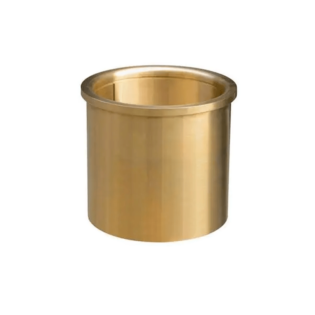
| Bushings/Bearings | 5mm to 150mm bore | Dimensional accuracy, surface finish | Turning, boring, reaming |
| Custom Connectors | Application specific | Electrical properties, fit tolerances | Multi-axis CNC machining |
Performance in Service Environments
| Environment | Tahan korosi | Temperature Limit | Suitability Rating | Limitations |
|---|---|---|---|---|
| Indoor Atmospheric | Bagus sekali | -40°C to +200°C | Bagus sekali | None significant |
| Outdoor Atmospheric | Bagus | -40°C to +150°C | Bagus | Regular maintenance recommended |
| Fresh Water | Bagus | 0°C to +80°C | Bagus | Avoid stagnant conditions |
| Marine (Seawater) | Miskin | T/A | Not recommended | Use naval brass instead |
| Industrial Chemicals | Variable | Depends on chemical | Case-by-case evaluation | Chemical compatibility testing required |
| High Temperature | Bagus | Up to 200°C continuous | Bagus | Oxidation resistance acceptable |
Available Product Forms
Standard Product Forms and Dimensions
| Formulir Produk | Size Range | Standard Lengths | Tolerance Class | Surface Condition |
|---|---|---|---|---|
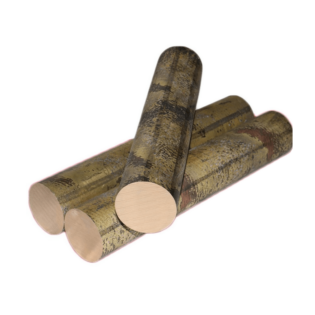
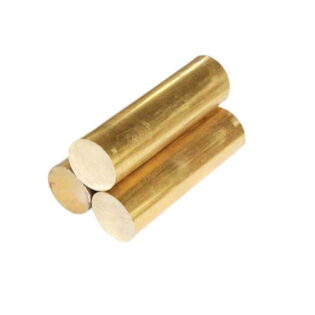
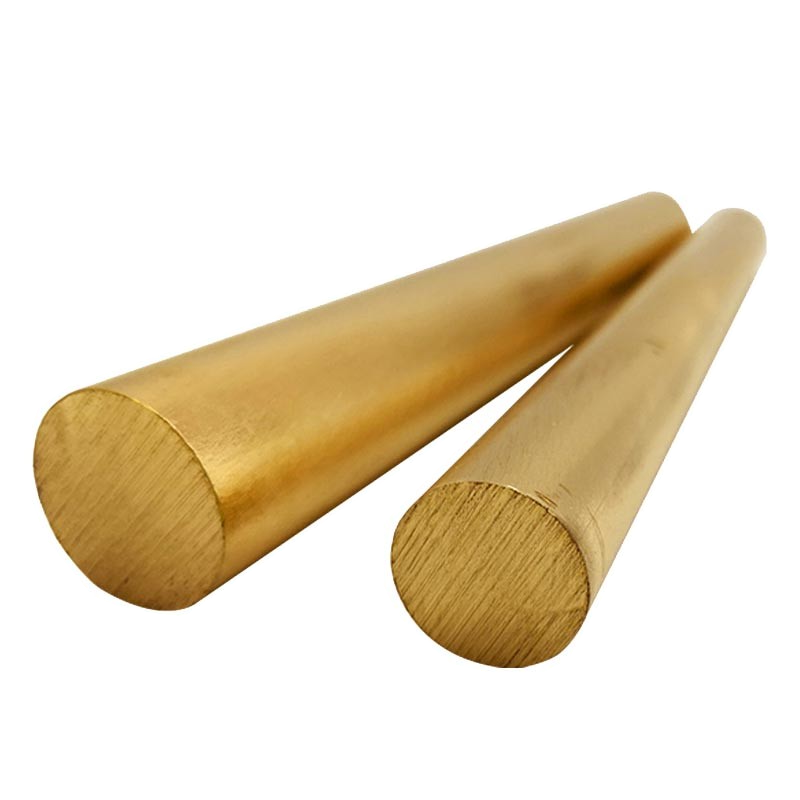
| Putaran Bar | 3mm – 350mm diameter | 1m, 2m, 3m, 4m, 6m | h9, h11 (ISO 286) | Bright drawn, centerless ground |
| Hexagonal Bar | 5mm – 150mm across flats | 1m, 2m, 3m, 4m | ±0.13mm | Bright drawn |
| Bar persegi | 5mm – 100mm square | 1m, 2m, 3m, 4m | ±0.13mm | Bright drawn |
| Rectangular Bar | 3-60mm × 10-200mm | 1m, 2m, 3m, 4m | ±0.15mm | Cold drawn, mill finish |
| Hollow Bar (Tube) | 10-300mm OD, 2-250mm wall | 1m, 2m, 3m, 6m | ±0.20mm | As drawn, bright |
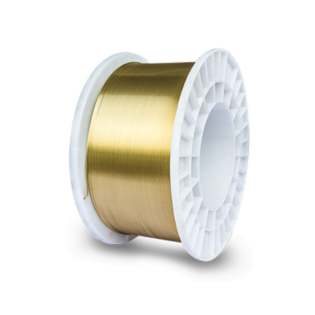
| Kabel | 0.5mm – 15mm diameter | Coils or cut lengths | ±0.05mm | Bright drawn |
Dimensional Tolerances and Surface Finish
| Diameter Range (mm) | Standard Tolerance (mm) | Precision Tolerance (mm) | Surface Roughness (Ra μm) | Straightness Tolerance |
|---|---|---|---|---|
| 3-6 | ±0.05 | ±0.02 | 0.4-0.8 | 0.5mm/m |
| 6-10 | ±0.08 | ±0.03 | 0.4-0.8 | 0.5mm/m |
| 10-18 | ±0.10 | ±0.04 | 0.6-1.0 | 0.3mm/m |
| 18-30 | ±0.13 | ±0.05 | 0.8-1.2 | 0.3mm/m |
| 30-50 | ±0.16 | ±0.06 | 0.8-1.6 | 0.2mm/m |
| 50-80 | ±0.19 | ±0.08 | 1.0-1.6 | 0.2mm/m |
| 80-120 | ±0.22 | ±0.10 | 1.2-2.0 | 0.15mm/m |
| 120-200 | ±0.25 | ±0.12 | 1.6-2.5 | 0.15mm/m |
Standards and Specifications
International Standards Compliance
| Standar | Full Designation | Geographic Scope | Specification Coverage |
|---|---|---|---|
| ASTM B16/B16M | Free-Cutting Brass Rod, Bar and Shapes | North America | Chemical composition, mechanical properties, dimensions |
| EN 12164 | Copper and copper alloys – Rod for machining purposes | Eropa | Manufacturing requirements, tolerances, testing |
| JIS H3250 | Copper and copper alloy rods and bars | Jepang | Chemical composition, mechanical properties, inspection |
| ISO 426-2 | Wrought copper-zinc alloys – Chemical composition and forms | International | Designation system, chemical limits |
| BS EN 12163 | Copper and copper alloys – Rod for general purposes | United Kingdom | General specifications, quality requirements |
| DIN 17660 | Copper-zinc alloys – Chemical composition and mechanical properties | Jerman | Material specifications, testing methods |
Chemical Composition Limits by Standard
| Standar | Cu (%) | Zn (%) | Pb (%) | Fe (%) | Other Elements |
|---|---|---|---|---|---|
| ASTM B16 | 60.0-63.0 | Sisa | 2.5-3.0 | ≤0.35 | Ni ≤0.5%, others ≤0.5% total |
| EN 12164 | 60.0-63.0 | Sisa | 2.5-3.0 | ≤0.35 | Ni ≤0.5%, Al ≤0.05% |
| JIS H3250 | 60.0-63.0 | Sisa | 2.5-3.0 | ≤0.35 | Similar to ASTM |
| ISO 426-2 | 60.0-63.0 | Sisa | 2.5-3.0 | ≤0.35 | Harmonized with EN |
Mechanical Property Requirements by Standard
| Standar | Tensile Strength (MPa) | Yield Strength (MPa) | Elongation (%) | Kekerasan |
|---|---|---|---|---|
| ASTM B16 (O61) | 338-380 | 124 min | 15 min | 50-70 Rb |
| ASTM B16 (H02) | 415-485 | 275 min | 8 min | 75-90 Rb |
| EN 12164 (M) | 340-430 | 140 min | 15 min | 60-85 HB |
| JIS H3250 (O) | 340-390 | 130 min | 15 min | 60-80 HB |
Heat Treatment and Processing
Heat Treatment Specifications
| Treatment Type | Temperature Range (°C) | Time at Temperature | Cooling Method | Resulting Properties |
|---|---|---|---|---|
| Annealing (O61) | 425-650 | 1-4 hours | Air cool | Soft, maximum ductility |
| Pelepas stres | 200-300 | 1-2 hours | Air cool | Reduced internal stress |
| Perawatan Solusi | 700-750 | 1 hour | Water quench | Homogeneous structure |
| Process Annealing | 300-400 | 30-60 minutes | Air cool | Partial softening |
Processing Characteristics
| Proses | Formability Rating | Temperature Requirements | Special Considerations |
|---|---|---|---|
| Cold Working | Bagus | Room temperature | Work hardening occurs, periodic annealing may be needed |
| Kerja Panas | Bagus sekali | 600-750°C | Best formability, avoid overheating |
| Pengelasan | Adil | Various | Lead vaporization concern, ventilation required |
| mematri | Bagus | 600-850°C | Compatible with most brazing alloys |
| Pematerian | Bagus sekali | 180-250°C | Easy to solder, good joint strength |
Quality Control and Testing
Standard Test Methods
| Property | Test Method | Sample Size | Frequency | Acceptance Criteria |
|---|---|---|---|---|
| Komposisi kimia | XRF Spectroscopy (ASTM E1086) | 3 pieces per heat | Every heat | Within specification limits |
| Tensile Properties | Tensile Test (ASTM E8) | 2 specimens per lot | Per production lot | Meet standard requirements |
| Kekerasan | Rockwell B (ASTM E18) | 3 readings per piece | Statistical sampling | Within specified range |
| Dimensional Accuracy | Coordinate Measuring (ASTM E1) | 100% or sampling | Continuous | Within tolerance |
| Kualitas Permukaan | Visual Inspection (ASTM B250) | 100% | Continuous | No defects |
| Struktur mikro | Metallography (ASTM E3) | 1 per production run | Weekly | Uniform α+β structure |
Defect Classification and Limits
| Defect Type | Class A (Critical) | Class B (Major) | Class C (Minor) | Detection Method |
|---|---|---|---|---|
| Komposisi kimia | Out of specification | Near limits | - | Spectroscopic analysis |
| Dimensional Variation | >2× tolerance | >1.5× tolerance | >tolerance | Dimensional measurement |
| Surface Defects | Cracks, deep scratches | Shallow scratches | Light marks | Visual inspection |
| Hardness Deviation | >±10 points | >±5 points | Within ±5 points | Hardness testing |
| Internal Defects | Voids, inclusions | Minor porosity | - | Ultrasonic testing |
Environmental and Safety Considerations
Material Safety Information
| Hazard Category | Risk Level | Primary Concern | Safety Measures |
|---|---|---|---|
| Lead Content | Moderate | Ingestion, inhalation of dust/fumes | Use ventilation, avoid machining dust inhalation |
| Machining Operations | Low | Metal dust generation | Standard machine shop practices |
| Welding/Brazing | Moderate | Lead fume generation | Adequate ventilation, respiratory protection |
| Fire Hazard | Very Low | Non-combustible metal | Standard fire precautions |
| Environmental | Moderate | Lead content requires proper disposal | Follow local regulations for metal waste |
Recycling and Disposal
| Aspect | Requirement | Compliance Method |
|---|---|---|
| Material Identification | Lead content declaration | Material certification documentation |
| Scrap Segregation | Separate leaded brass collection | Designated scrap containers |
| Recycling Process | Specialized brass recycling | Certified metal recyclers |
| Waste Disposal | Hazardous waste classification | Licensed waste disposal services |
| Dokumentasi | Chain of custody records | Material tracking systems |
This technical specification provides comprehensive information about C36000 Free Cutting Brass for engineering and manufacturing applications.