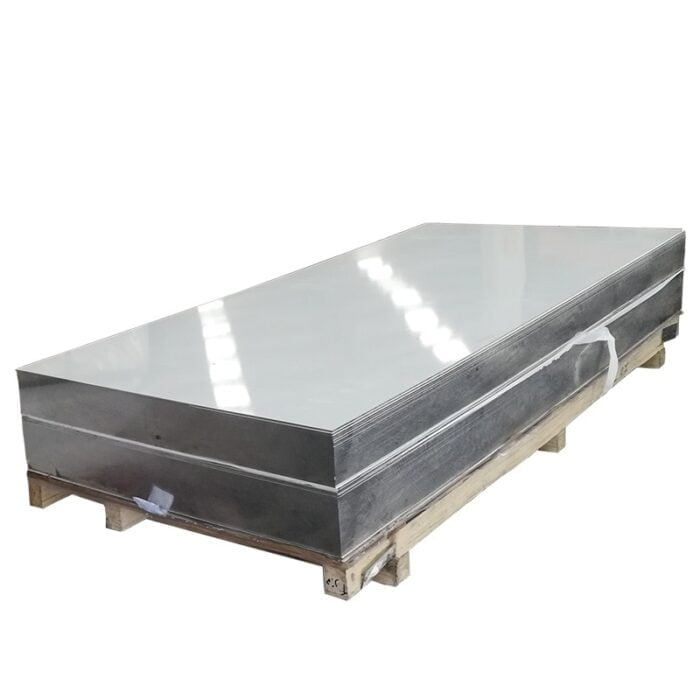
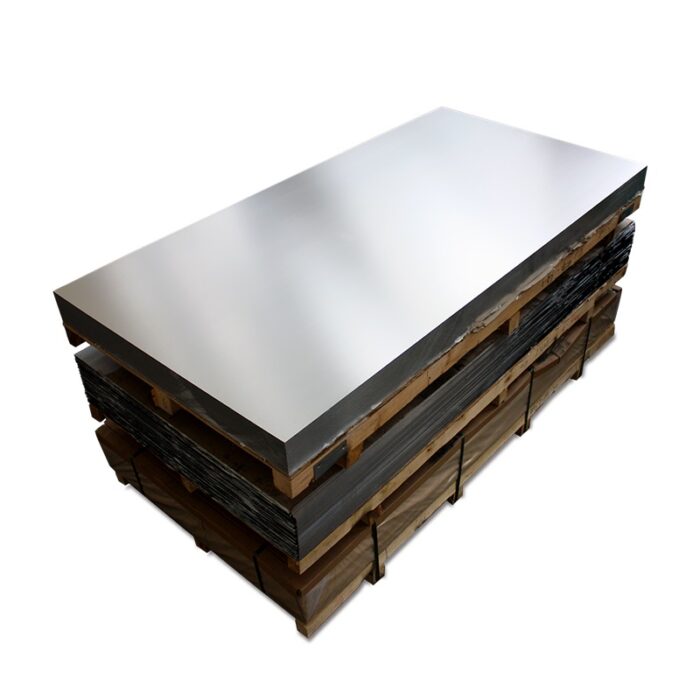
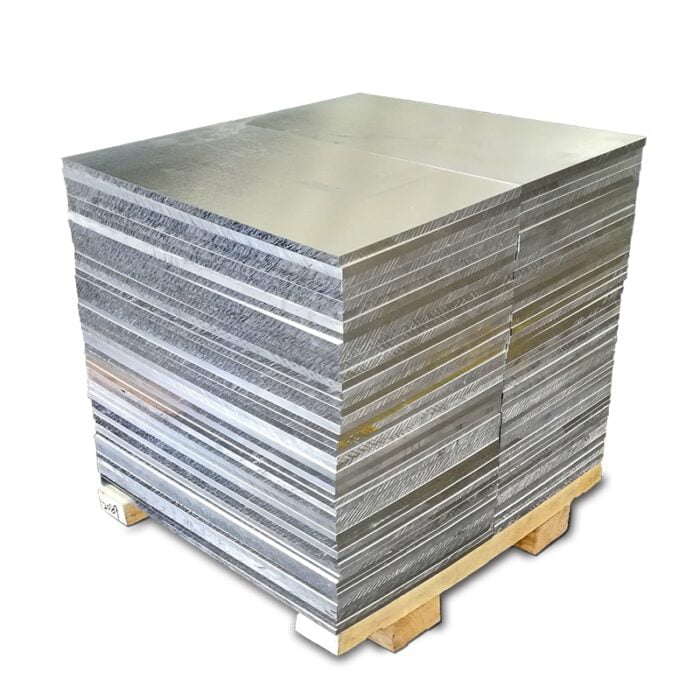
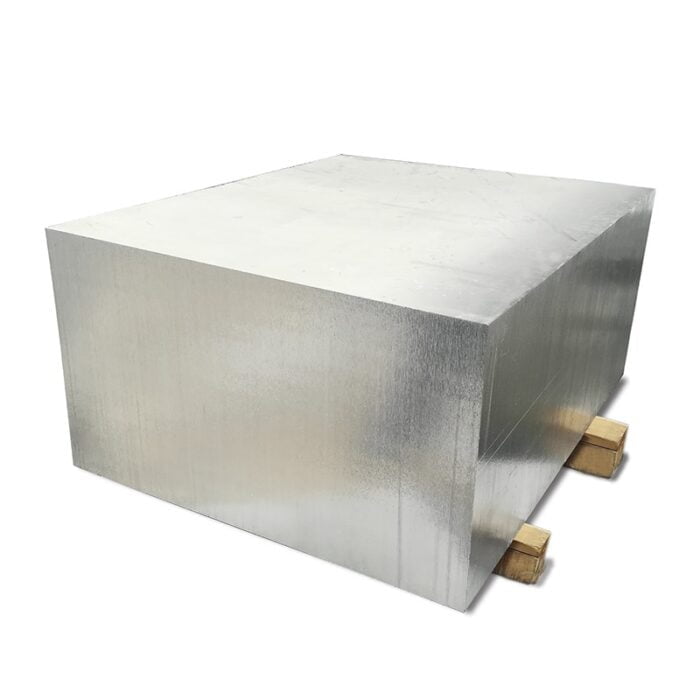
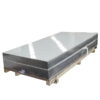
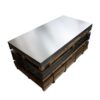
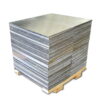
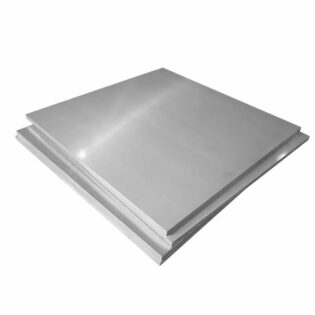
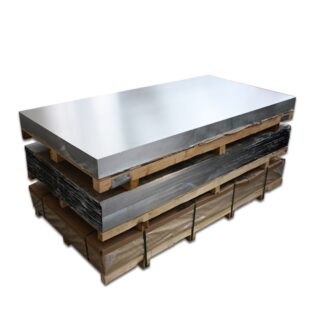
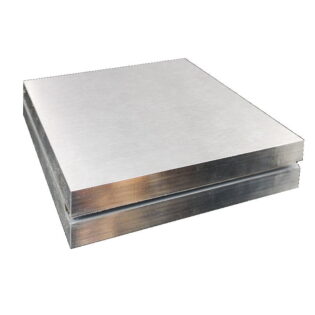
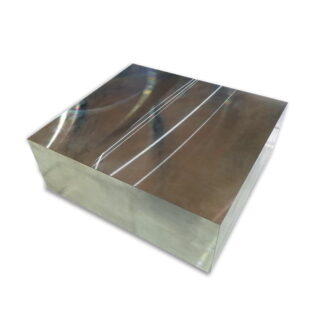
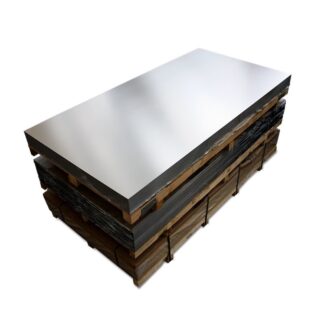
6061 Aluminum Alloy Product Introduction
Komposisi kimia
| Elemen | Composition (%) |
|---|
| Silicon (Si) | 0.40 – 0.8 |
| Iron (Fe) | 0.70 max |
| Copper (Cu) | 0.15 – 0.40 |
| Manganese (Mn) | 0.15 max |
| Magnesium (Mg) | 0.80 – 1.20 |
| Chromium (Cr) | 0.04 – 0.35 |
| Zinc (Zn) | 0.25 max |
| Titanium (Ti) | 0.15 max |
| Yang lain | 0.05 max each, 0.15 max total |
Peralatan mekanis
| Property | Nilai |
|---|
| Tensile Strength (MPa) | 310 |
| Yield Strength (MPa) | 276 |
| Elongation at Break (%) | 12 |
| Hardness (Brinell) | 95 HB |
Performance at Different Temperatures
- Good performance at room temperature with stable mechanical properties.
- Maintains strength and toughness at low temperatures.
- Slightly decreases in strength at higher temperatures above 100°C.
Industrial Applications
| Industry Sector | Aplikasi |
|---|
| luar angkasa | Aircraft structures, fuselage panels |
| Otomotif | Vehicle frames, wheels, automotive parts |
| Marine | Boat hulls, components exposed to saltwater |
| Konstruksi | Structural components, bridges, scaffolding |
| Consumer Goods | Bicycle frames, sporting equipment |
Shapes and Sizes
- Forms: Sheets, plates, bars, tubes, extrusions.
- Sizes: Thickness ranging from 0.2 mm to 200 mm, various shapes and dimensions available.
Production Standards
- ASTM B209: Standard specification for aluminum and aluminum-alloy sheet and plate.
- Various international standards based on application and manufacturing requirements.
Standards and Corresponding Grades
| Country/Region | Standar | Corresponding Grades |
|---|
| Amerika Serikat | ASTM B209 | 6061 |
| Eropa | EN 573, EN 485 | EN AW-6061 |
| Jepang | JIS H4000, JIS H4040 | JIS A6061 |
| Cina | GB/T 3190, GB/T 3880 | 6061A |
Welding and Processing
| Welding Methods | Processing Methods |
|---|
| TIG, MIG, Resistance | Cutting, drilling, machining |
Heat Treatment and Cold Processing
- Responds well to heat treatment for improving strength and hardness.
- Cold working can enhance mechanical properties but may reduce formability.
Advantages and Disadvantages
| Keuntungan | Metode pemotongan |
|---|
| High strength-to-weight ratio | Lower corrosion resistance than some alloys |
| Kemampuan mesin yang baik | More expensive than some aluminum alloys |
| Versatile applications across industries | Limited to moderate formability in certain processes |
Similar Products and Comparison
| Alloy Type/Property | 6061 Alloy | 6063 Alloy | 7075 Alloy |
|---|
| Composition (%) | Si: 0.40-0.8 | Si: 0.20-0.6 | Si: 0.40 |
| Tensile Strength (MPa) | 310 | 185 | 570 |
| Yield Strength (MPa) | 276 | 145 | 505 |
| Aplikasi | General purpose structural applications | Architectural applications | Aerospace, high-strength applications |
Conclusion
6061 aluminum alloy stands out for its combination of strength, lightweight properties, and corrosion resistance, making it a popular choice across various industries. Its versatility in processing and applications ensures it remains a cornerstone material in modern manufacturing and construction.
This outline provides a structured approach to crafting a comprehensive introduction to 6061 Aluminum Alloy, covering its chemical composition, mechanical properties, applications, production standards, processing methods, advantages, disadvantages, and comparison with similar alloys.