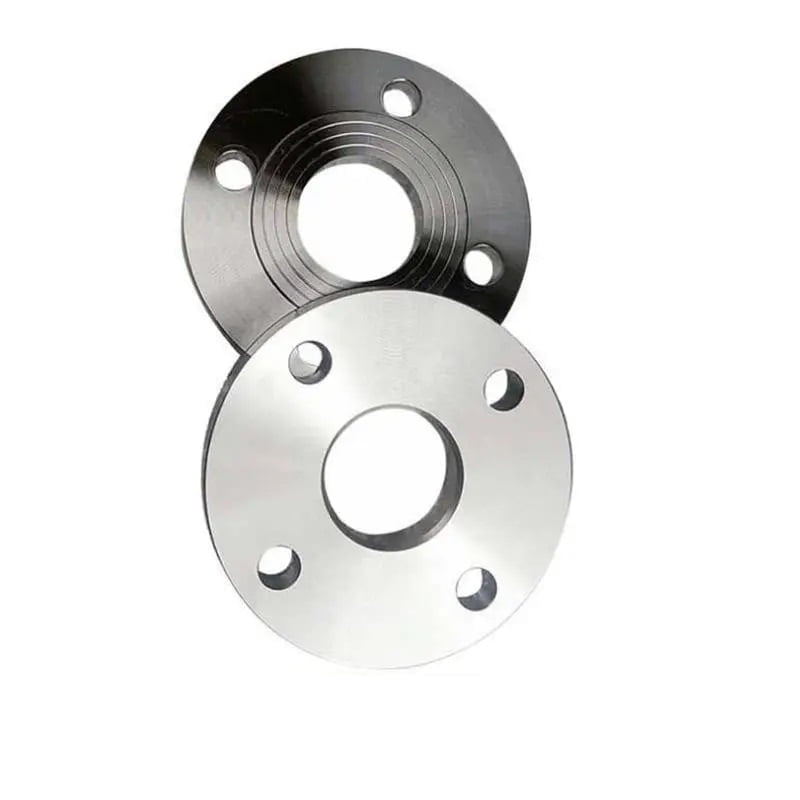
Nickel-based alloy flanges are essential components used across various industries owing to their superior properties, such as excellent corrosion resistance, high temperature handling capabilities, and exceptional mechanical strength. These flanges are employed in demanding environments where other materials would fail, ensuring the reliability and longevity of installations in sectors ranging from aerospace to chemical processing. Here, we delve into the detailed aspects of nickel-based alloy flanges to provide a comprehensive understanding of their composition, properties, applications, and more.
Welding, Processing, Polishing, and Heat Treatment
Proses
Details
Pengelasan
TIG, MIG, GTAW, SMAW
Pengolahan
Forging, Machining, Rolling
pemolesan
Mechanical, Electropolishing, Buffing
Perawatan panas
Annealing, Solution Treatment, Aging
Cold Processing and Heat Treatment
Paduan Nikel
Cold Processing
Perawatan panas
Inkonel 625
Cold rolling, Cold drawing
Solution annealing at 1093-1204°C
Hastelloy C276
Cold rolling, Cold drawing
Solution annealing at 1121-1177°C
Monel 400
Cold rolling, Cold drawing
Stress Relief at 594-649°C
Nickel 200
Cold rolling, Cold drawing
Annealing at 649-760°C
Advantages and Disadvantages of Nickel-Based Alloys
Paduan Nikel
Keuntungan
Metode pemotongan
Inkonel 625
High strength, Corrosion resistance
Expensive, Difficult to machine
Hastelloy C276
Superior corrosion resistance
Very expensive, Limited availability
Monel 400
Excellent in marine environments
Lower high-temp performance, Costly
Nickel 200
Good electrical conductivity, Cheap
Poor high-temp performance, Soft material
Similar Products and Comparison
Paduan Nikel
Similar Product
Comparison
Inkonel 625
Incoloy 825, Hastelloy X
Inconel 625 has better high-temp resistance
Hastelloy C276
Incoloy 800, Alloy 20
C276 offers better corrosion resistance
Monel 400
Cupronickel, Aluminum-Bronze
Monel 400 better corrosion resistance but more costly
Nickel 200
Stainless Steel 304, 316
Nickel 200 better in caustic environments
With their diverse properties and tailored applications, nickel-based alloy flanges play a pivotal role in ensuring the durability, safety, and efficiency of various industrial processes. The advantages they offer, from high corrosion and temperature resistance to unique mechanical properties, make them indispensable despite some production and cost-related challenges. Understanding these flanges in detail helps in making informed decisions for their optimal application in respective industries.
itu masuk ke zona suhu tinggi di mana struktur matriksnya adalah fase tunggal austenit
Untuk memberikan pengalaman terbaik, kami menggunakan teknologi seperti cookie untuk menyimpan dan/atau mengakses informasi perangkat. Menyetujui teknologi ini akan memungkinkan kami memproses data seperti perilaku penjelajahan atau ID unik di situs ini. Tidak menyetujui atau menarik persetujuan, dapat berdampak buruk pada fitur dan fungsi tertentu.
Fungsional
Selalu aktif
Penyimpanan atau akses teknis sangat diperlukan untuk tujuan sah yang memungkinkan penggunaan layanan tertentu yang secara eksplisit diminta oleh pelanggan atau pengguna, atau untuk tujuan semata-mata melakukan transmisi komunikasi melalui jaringan komunikasi elektronik.
Preferensi
Penyimpanan atau akses teknis diperlukan untuk tujuan sah menyimpan preferensi yang tidak diminta oleh pelanggan atau pengguna.
Statistik
Penyimpanan atau akses teknis yang digunakan secara eksklusif untuk tujuan statistik.Penyimpanan atau akses teknis yang digunakan secara eksklusif untuk tujuan statistik anonim. Tanpa panggilan pengadilan, kepatuhan sukarela dari Penyedia Layanan Internet Anda, atau catatan tambahan dari pihak ketiga, informasi yang disimpan atau diambil untuk tujuan ini saja biasanya tidak dapat digunakan untuk mengidentifikasi Anda.
Pemasaran
Penyimpanan atau akses teknis diperlukan untuk membuat profil pengguna untuk mengirim iklan, atau untuk melacak pengguna di situs web atau di beberapa situs web untuk tujuan pemasaran serupa.